This post is a summary and analysis of the avian ‘spring’ migration season, as observed in the Hastings area this year. I’m going to run with a very loose definition and cover the period from beginning of January through to end June inclusive, rather than try and rely on any assumptions about directionality or purpose of movement.
With family commitments keeping me closer to home in the past year, I focused my birding on a combination of relatively short walks/watches within the Hastings Borough boundary and analysis of nocturnal recordings made at home in the West Hill area of Hastings. The latter has been a real source of delight and wonder, and I’ve ended up recording many species which I’d never dream of seeing locally by day. There’s something magical about listening back to the recordings and imagining the birds flying over the gloomy peaks and troughs of Hastings by night.
The usual processions of wintering Gannet, Razorbill, Common Guillemot and Red-throated Diver dominated my seawatches for the first two months of the year. Kittiwake were also recorded in particularly good numbers this winter. I assume these were wintering birds on a feeding foray rather than passing through but it’s hard to say given their nomadic habits. The first winter period also saw small numbers of Little Gull lingering offshore (mostly adults), following storms earlier in the winter, including an excellent five on the 27th at St Leonards Marina.
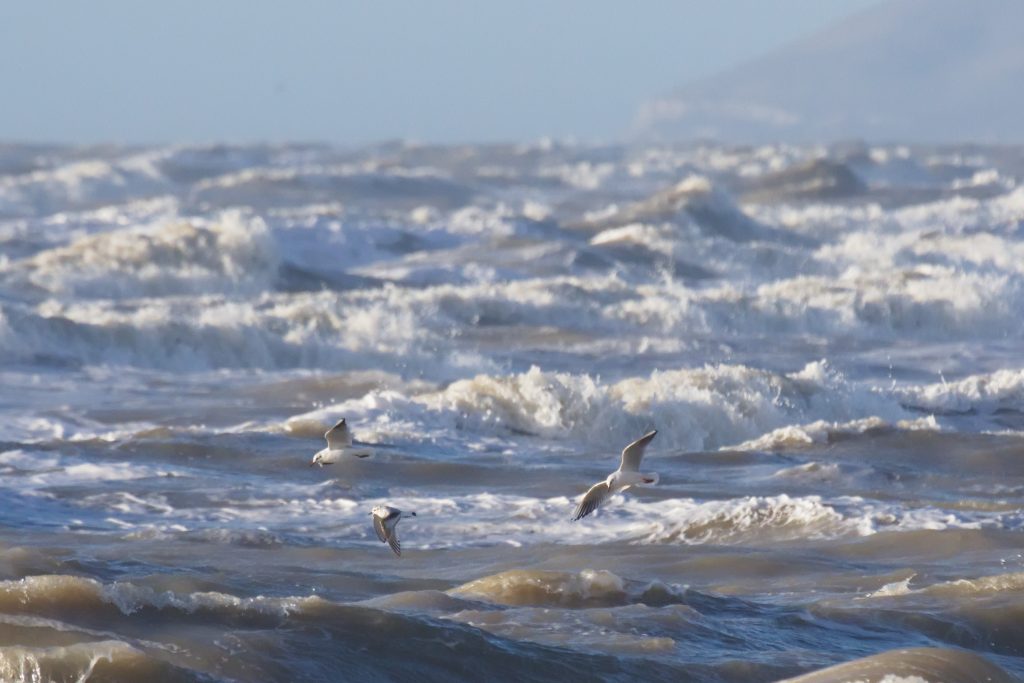
It was a poor winter for large gulls however, with no Caspian Gull or Yellow-legged Gull records in January and February. My first eastbound Mediterranean Gull were recorded from St Leonards Marina on the 23 January. A Shag on the 17th Jan was notable, a scarce bird here, which flew west with a Red-throated Diver. By the last week of February most of the wintering birds had cleared out and the sea appeared much quieter.
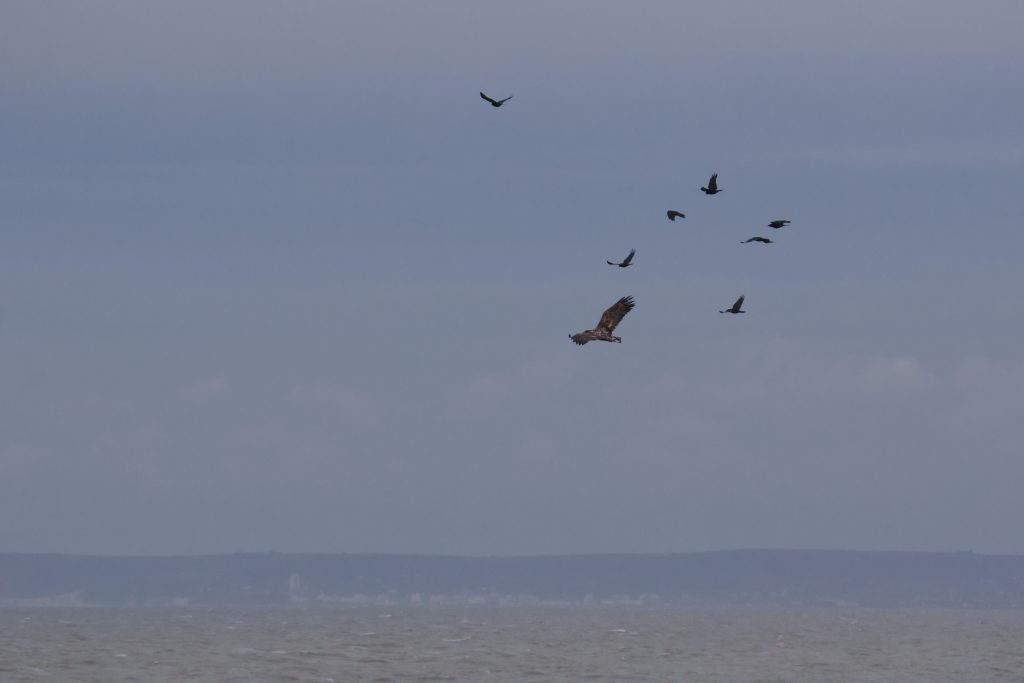
A seawatch oddity on the 11th Jan, as an immature White-tailed Eagle glided into view over the shingle and concrete of St Leonards Seafront, pursued by a huge flight of local Herring Gulls and Carrion Crows. This was a tracked bird from the Isle of White reintroduction programme and seemed to linger (or at least visit) the Hastings/Rye area for several weeks.
Dark-bellied Brent Geese were on the move in small numbers from the beginning of the year. The early movers may be birds from western Britain relocating to more productive feeding habitat. The big south coast Brent passage day this year was on the 10th March (over 6000 went east past Dungeness Point) but I missed out on the whole thing due to localised fog!
There was an exceptional influx of grey geese nationally over the 2025-26 winter, with a particular concentration in the south and east, which led me to hope I might record some on the move through Hastings. This finally came to pass in the early hours of 7th Feb, as a noisy flock of Greater White-fronted Geese flew over the house, and were thus captured by my passive recorder. It was a challenging ID given the poor quality of the recording but I think the high notes and slightly sing-song quality only fit Greater White-front.
Offshore wildfowl migration was barely noticeable this spring and I only recorded a handful of flocks of the usual species between January and early March. Gadwall is a pretty scarce bird here and I only recorded two in 2025, so a reasonable showing of nine birds was an exception. By the end of February, I’d started recording nocturnal migration of dabbling ducks over the house, which continued for exactly a month between Feb 24th and March 24th. Flocks of Eurasian Wigeon and Eurasian Teal were most frequent, with one occurrence of Northern Pintail on 8th March.
The descending zeeer calls of Redwing were the soundtrack to late winter and early spring nights, and there were only a handful of dates in Feb and March on which they weren’t captured by my recorder. The best nights were spectacular, with a clear peak on night of 22-23rd March and a final estimate of at least 622 individuals. Song Thrush often seemed to be moving through over the same period, though typically in single figures, plus just four Blackbird and a single Fieldfare.
To my surprise, Moorhen were the second most common species captured on my nocturnal recordings, occurring from early Feb all the way through to the end of June. Some of these could be roaming local birds from the Alexandra Park population, though given how much numbers there thin out into the breeding season, I’d imagine some were on the move. The flights of Eurasian Coot, however, are much harder to explain in a local context, as the species is effectively absent from Hastings aside from the odd autumn record. I recorded 20 between 7th Feb and 17th June, though most (12) occurred in March and April.
The nearest reliable Coot locality would be Combe Valley CP i.e. about 3 miles to the east. This begs the question what are these birds doing? There seems to be a theory that at least some of these spring Coots are, as for Moorhen, territorial birds from further afield making exploratory flights. The story is similar for Water Rail, which I recorded just twice in early April. I love imagining one of these gangly skulkers flying over urban Hastings, detectable only by the reedy trill of its nocturnal flight call.
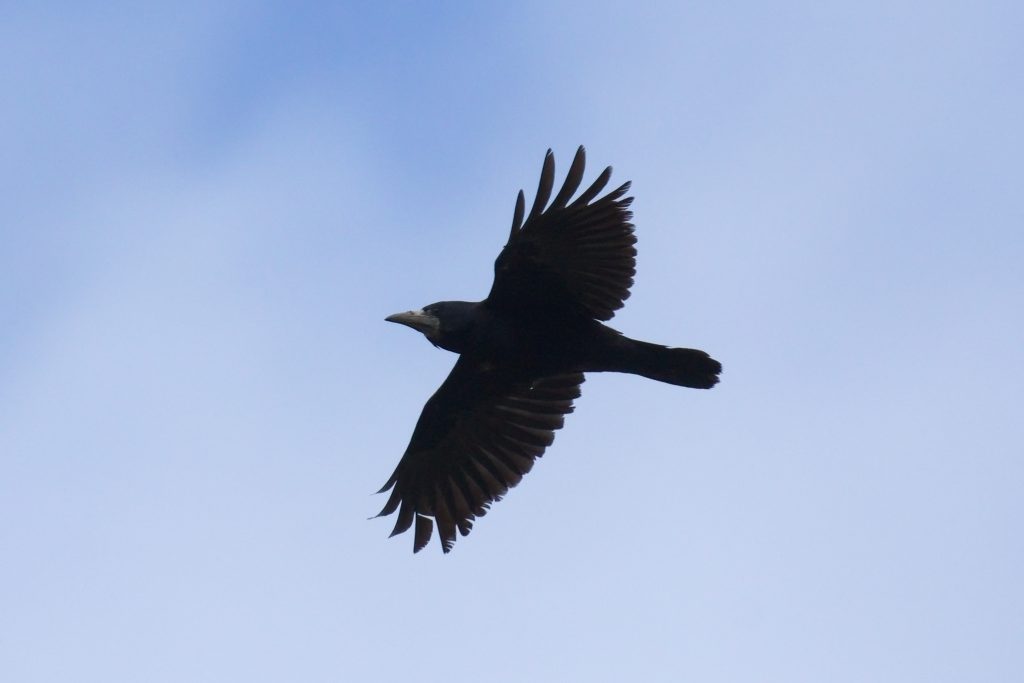
An early fixture in the visible migration of landbirds here is corvid passage, a fascinating phenomenon which I’ve been spending time researching. This begins with the first Rook in February, followed shortly thereafter by Carrion Crow in early March. We don’t have any breeding or wintering Rook in Hastings (though they are present in the wider landscape) so there certainly seems to be some kind of purposeful movement occurring.
Carrion Crow, on the other hand, are common local breeders which muddies the waters somewhat in terms of separating passage birds from local birds. Having spent several years watching, I do think there is some kind of passage occurring though it’s hard to say from where/to. For what it’s worth, a study in Paris found that in spring 2CY Carrion Crow disperse from their natal site and can then roam 200+ km.
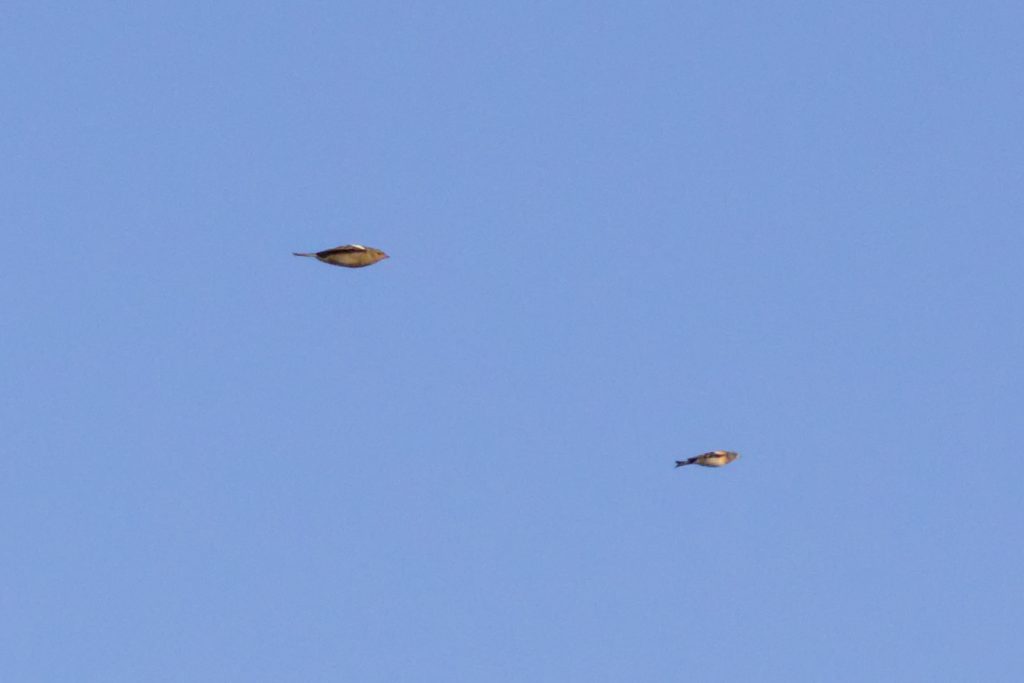
Common Chaffinch started moving through in early March, though the ideal NE winds didn’t come quite in time for any significant counts. Nonetheless there were a few nice early season spring scarcities including a handful Brambling and single records of Common Reed Bunting and Common Crossbill. The Brambling included a small flock of at least one, but possibly five, coming in off the sea in thick fog.
Grey Heron were frequent in March both as diurnal visible and nocturnal sound-recorded migrants. They seem to be highly vocal when on the move and their raucous squawks are a favourite of mine.
One of the big surprises of the spring was a recording of a single call from a Eurasian Bittern on the 31st March; a deep graow which can be heard reverberating over the houses in the recording below.
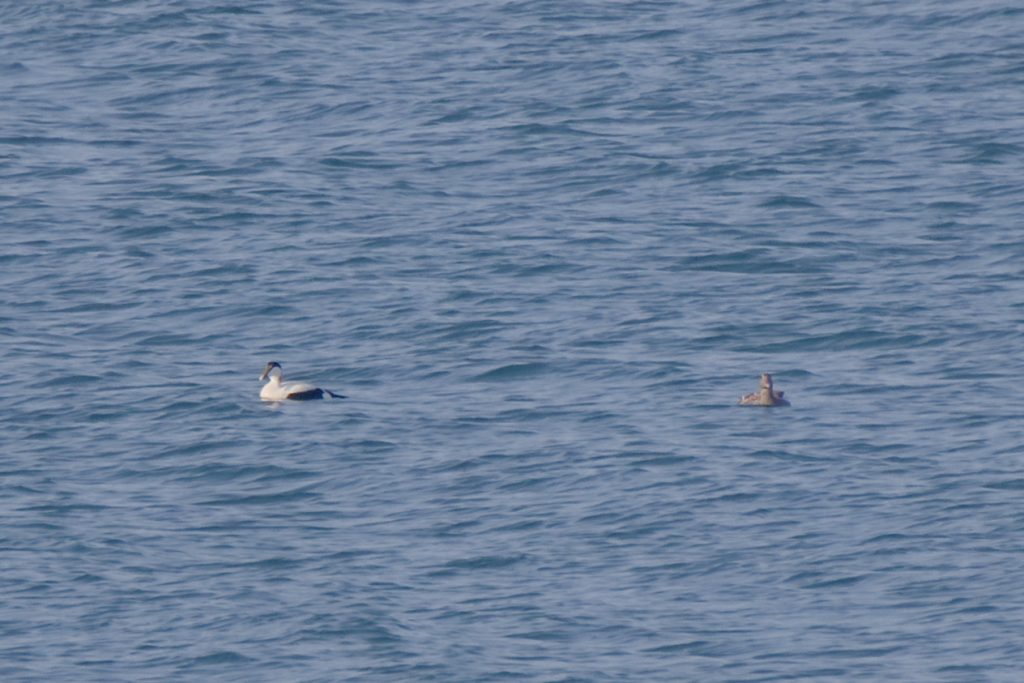
Seawatching also started to gain a bit more variety as we moved into March. I recorded Common Eider on two occasions, including a female heading east on the 2nd March with a Northern Pintail, and a pair on the sea off St Leonards Marina on the 9th May. A new bird for me in Hastings was a single Common Pochard, which flew east while I was seawatching on the 30th April.
On the 31st March, four Black-necked Grebe, drifting east offshore on a glassy sea, were my first in Hastings. What I can only assume were the same birds turned up on the pits at Dungeness later in the day where they hung around for a couple of days before moving on. My last offshore Great-crested Grebe of the period was seen on the 30th April.
Passerine arrivals had the usual tenor of springs on our stretch of the south coast, with birds seeming to arrive promptly at inland territories and relatively little in the way of grounded birds or diurnal movement apparent here. I recorded my first Norther Wheatear on the 24th March at Bulverhythe Beach and Willow Warbler on the 31st March. It ended up being a pretty good year for the latter here, with regular singing birds in parks around the town. This peaked with a notable fall of 16 at West Hill, found by David Campbell on the 9th April.
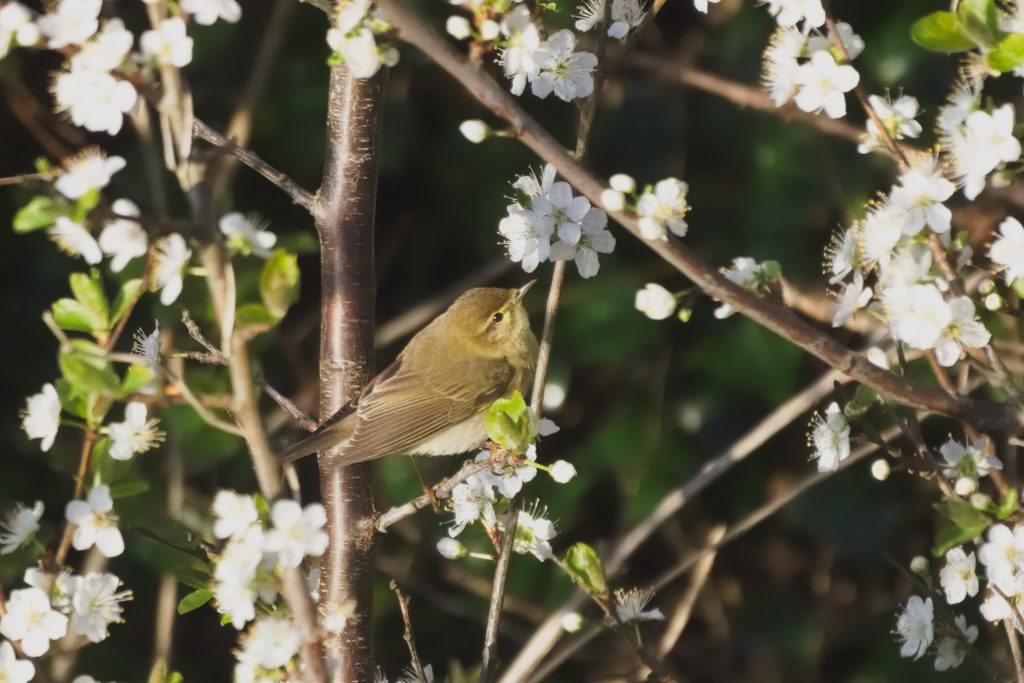
There then followed the usual trickle of arrivals in off the sea, mostly consisting of Meadow Pipit, then later, Swallow. My first dates for other passerine species follow: Barn Swallow (13th April); Lesser Whitethroat (16th April); Sand Martin (17th April); Western Yellow Wagtail (22nd April); Common Whitethroat (25th April); Western House Martin (6th May).
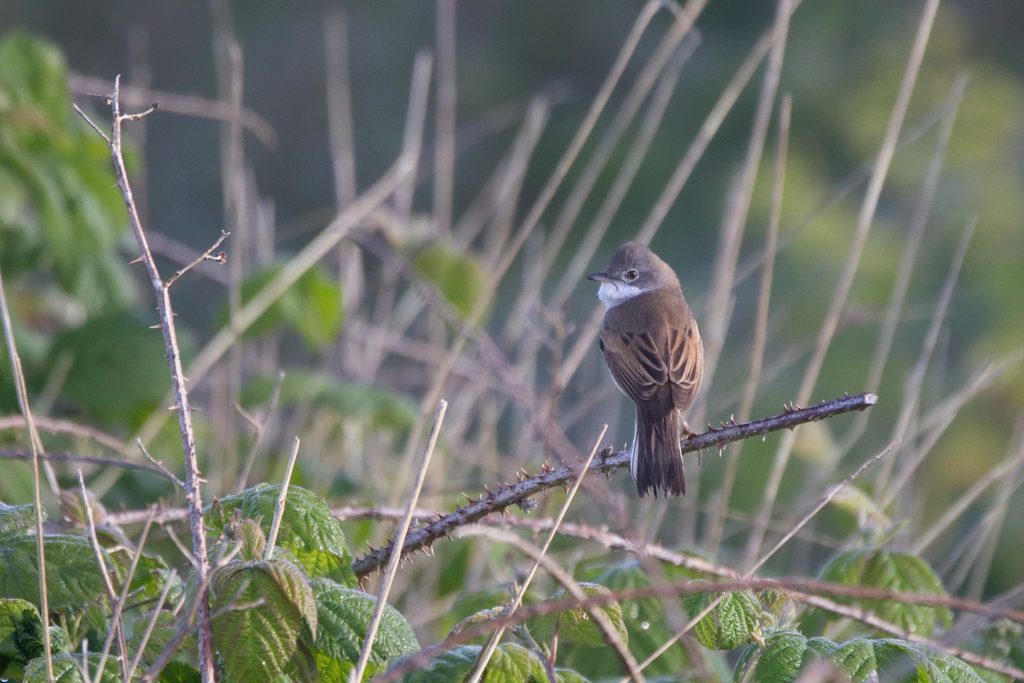
It was hard to figure out what was going on with Eurasian Blackcap arrivals, as wintering birds complicate the picture. As far as I could tell, winterers started singing in January but stopped at some point in late Feb, to be replaced a few weeks later by the first spring arrivals. I did capture Blackcap on my nocturnal recorder, with three birds on three different nights in April, all delivering short, optimistic fragments of song as they moved through.
As April progressed and it felt like the bulk of passerine migration had concluded and my focus returned to the sea once more. After several years of frustration, the stars aligned and I enjoyed a few days of excellent seawatching. It seemed that an area of high pressure over the channel (basically required for up channel passage) combined with the brisk easterly wind (f4-6) to encourage birds to move closer to the shoreline. Interestingly this wind is not the south-easterly viewed as preferable at other seawatch sites in Sussex. This may reflect the angle of the coastline here, which actually runs more WSW to NNE than E to W. A direct easterly therefore forces birds into the coastline if they are to effectively tak into the wind.
During this period, one of my highlights of the spring was watching a pair of Black-throated Diver fly past the seafront in glorious summer plumage. It’s taken me a long time to catch-up with this rather enigmatic species and it was worth the wait.
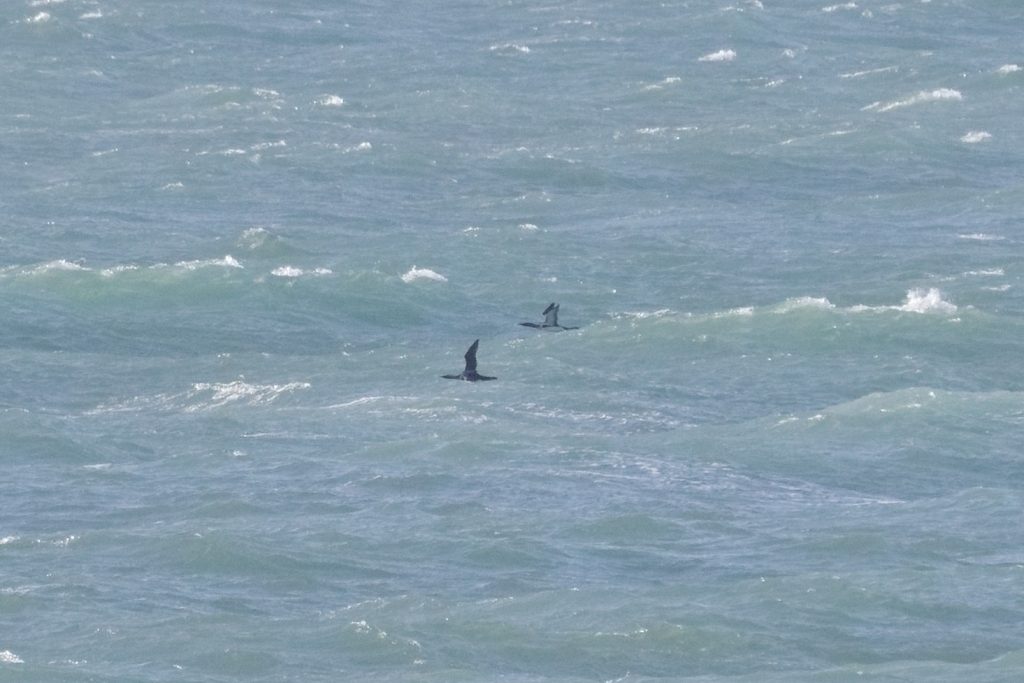
Speaking of enigmatic, skuas remain enduringly so, yet this year marked a first ever for me: a three skua spring. Great Skua are thin on the ground these days but Arctic Skua and Pomarine Skua still pass up the channel in significant numbers in April and May. In several years of spring seawatches, I’ve managed just one Arctic Skua and one Great Skua from Hastings. This year, over a period of about five days, I recorded seven Arctic Skua, a single Great Skua and, much to my delight, a group of four Pomarine Skua making their way east in hazy sunshine. What a treat to finally see the latter species, such charismatic birds with their bizarre tail feathers and fleeting presence off our coastline.
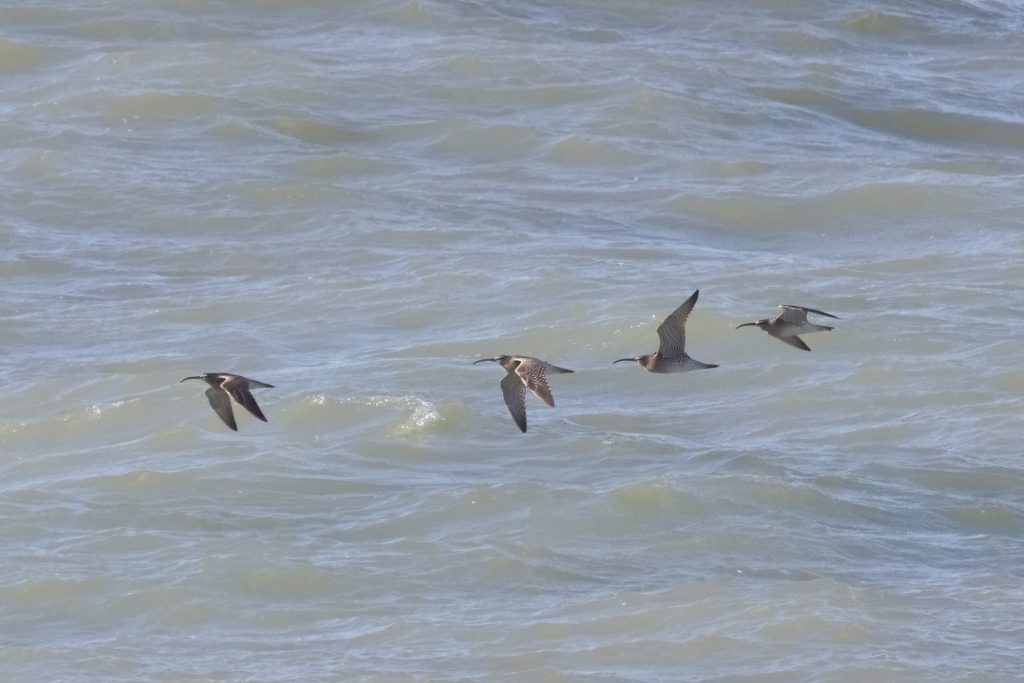
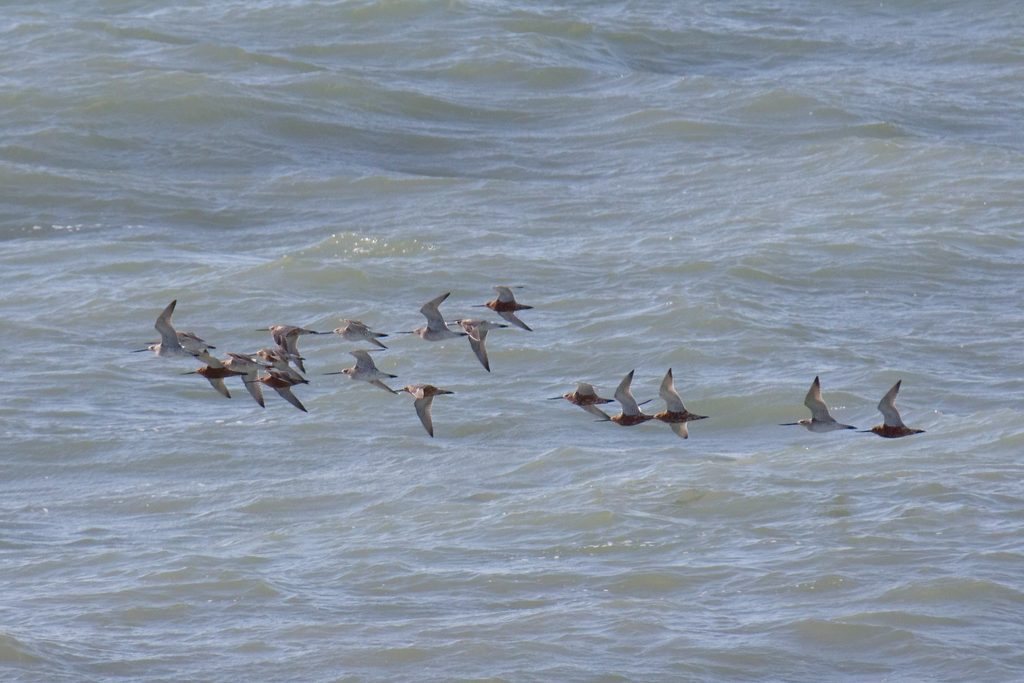
With the lack of suitable stopover habitat for most wader species in Hastings, grounded records were limited to a few Common Sandpiper on Wishing Tree and Buckshole Reservoirs. Offshore passage commenced with an early Whimbrel heard from fog over West Hill on the 10th March, after mild weather and southerly winds encouraged some advanced eastward passage. It wasn’t until April though that the usual flocks of that species started to pile through alongside Bar-tailed Godwit, as well as good numbers of Sanderling and Grey Plover, by local standards.
I was surprised to find far more variety was represented in my nocturnal recordings. A summary of wader records follows, with estimated numbers in brackets: Eurasian Oystercatcher (25), Eurasian Curlew (1), Whimbrel (8), Little Ringed Plover (3), Common Ringed Plover (1), European Golden Plover (12), Common Sandpiper (4), Green Sandpiper (1), Common Redshank (4), Dunlin (2).
The quantity of Golden Plover was quite surprising, with the species occurring from late-Feb all the way through to mid-April. As the recording below demonstrates, their calls can be more complex than the simple peeeet which I more commonly recorded.
The Little Ringed Plover were a highlight of the spring – it seems remarkable that one of these diminutive waders flew low enough over the house to be audible, let alone three!
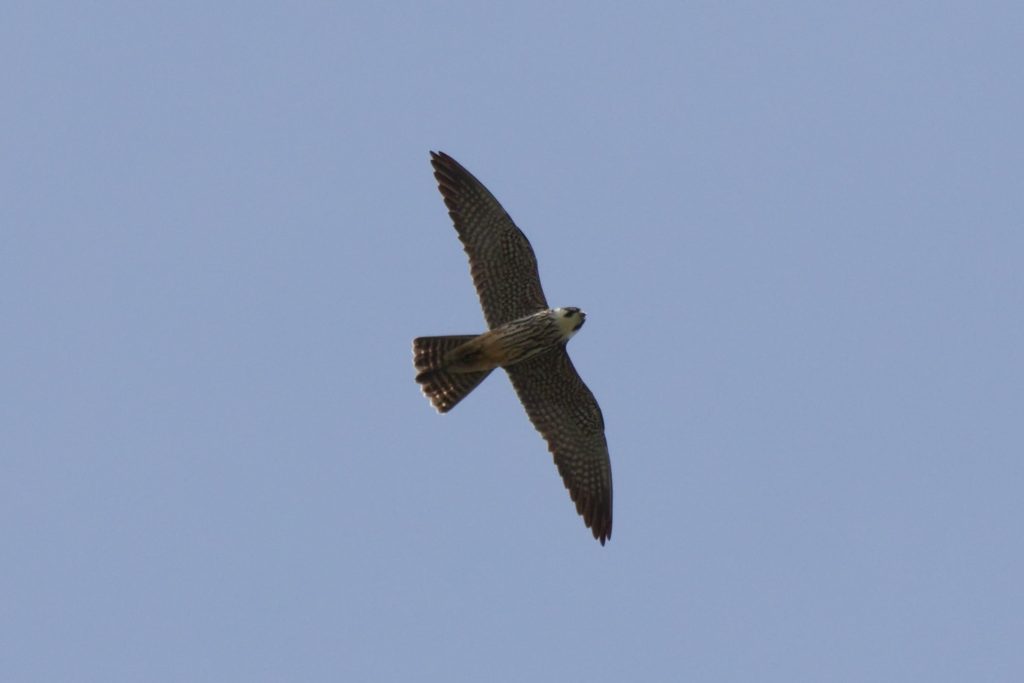
For me the only migrant raptor action of note was what felt like a descent spring for Eurasian Hobby, with at least four birds seen over the town. One was from Bembrook Road, which I quite fancy for raptor watching, sitting as it does on a N-S aligned ridge looking towards East Hill and at the end of a nice leading line from Hastings CP heading west. Andrew Grace had a bit more luck with an Osprey low over his Hastings home on March 27th.
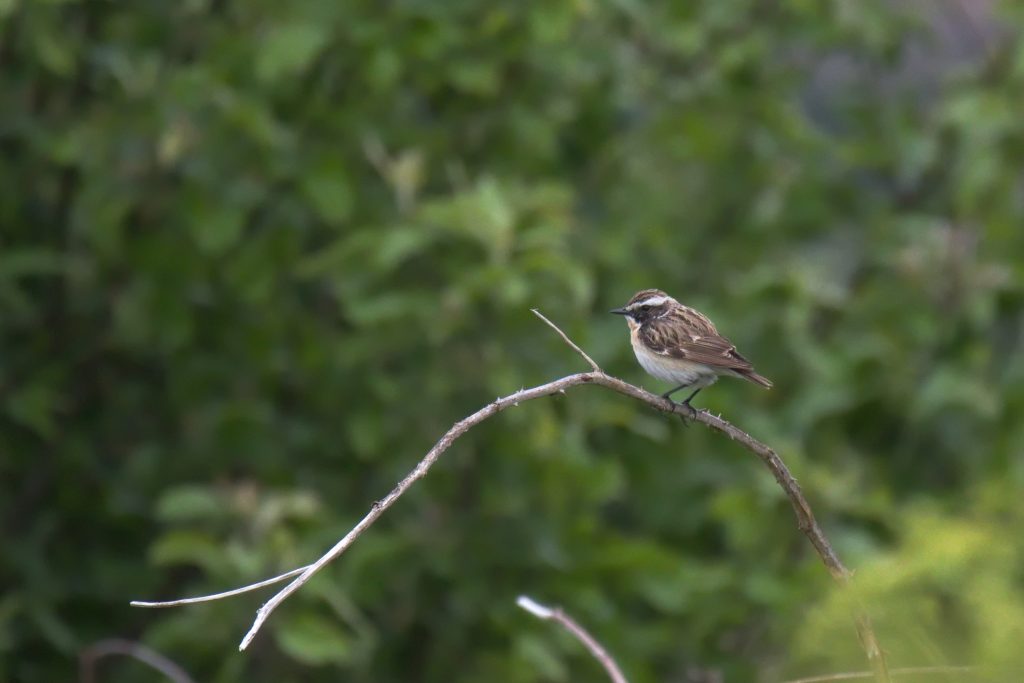
By mid-May an end of season feeling had started to kick in, with volumes of migrants much reduced – but there were a few more surprises in order. The first of these was a lovely male Whinchat in bramble scrub at Ladies Parlour, West Hill, on the 14th May.
While I didn’t see a single flycatcher in the flesh this spring (not unusual), there was some excellent nocturnal movement of Spotted Flycatcher; as a blocking weather pattern finally cleared in late May it seemed to open the flood gates for their northward passage. Ten birds were recorded on the night of 20th-21st May, which were followed by another five over the following week. It seems rather unlikely that my recorder would pick up many calls from passerines of this size, especially one as subtle as this, so I’m sure there were vastly more moving than my recordings indicate.
Following this was the first of a series of heatwaves, which seems to have been one of the driving forces behind an influx of Common Quail into the country. This yielded my first record of the species in the Hastings area, recorded calling on my nocturnal sound recording on the 24th May, followed by a second on the 27th May. I was able to use measurements of the distance between call notes to ascertain that these were two different individuals, which research has been found to be a reliable means of separation.
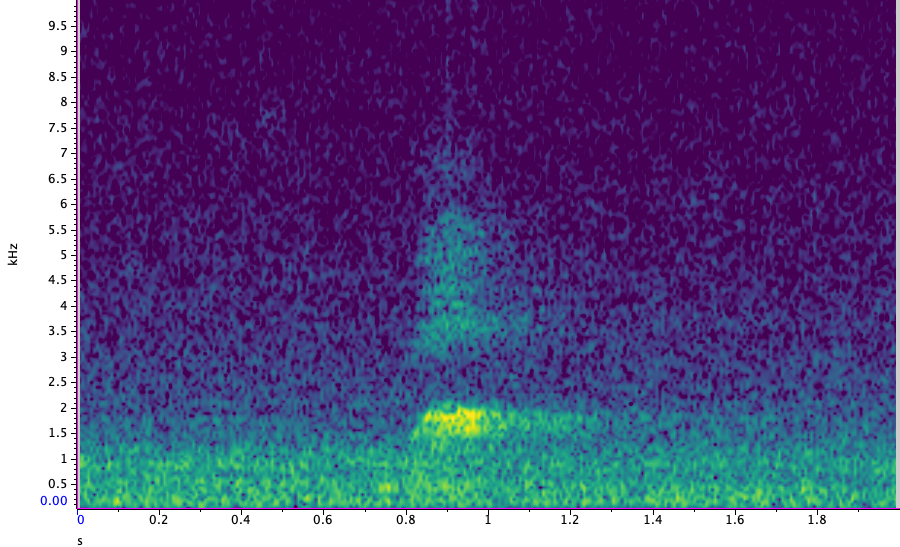
One final surprise came right at the beginning of June, with a series of calls from a Black-crowned Night Heron which flew over the house on the morning of the 1st. A dream nocmig bird, I feel very lucky to have recorded one in my first year. The bird seemed approach slowly, perhaps circling for some time, while giving a handful of distant calls, before one loud qwar directly overhead which echoed along the terrace.
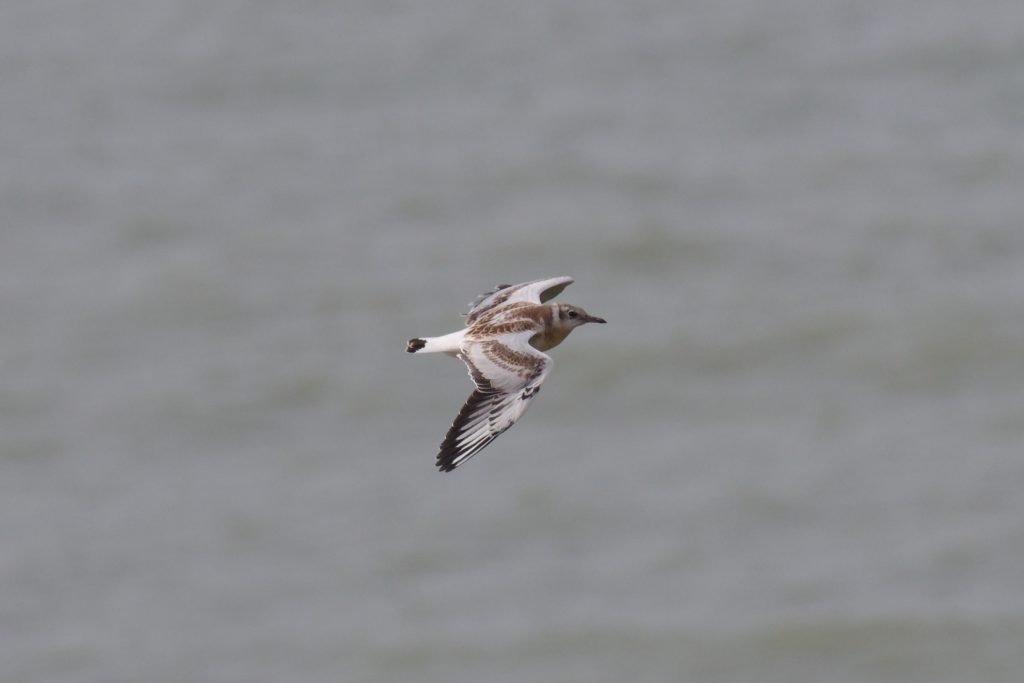
On the 11th June my first juvenile Black-headed Gull of the season was seen heading west from Ladies Parlour. This was first of a number of signs of juvenile dispersal commencing in June, the other prominent species being Grey Wagtail and Great Spotted Woodpecker. In mid- to late- June there was a noticeable passage of Eurasian Curlew offshore, which is not something I’ve noticed here before. By late June, David Campbell had recorded the first (presumably) southbound Common Reed Warbler of avian autumn at West Hill.
Leave a Reply